In northern Minnesota, a job title can sound simple and still hide a very different set of demands once the shift starts. Express’s public workforce examples span office services, light industrial, skilled trades, logistics and customer service, and the office notes that similar titles do not always mean identical work; a move from one role to another can require new safety practices, software skills or customer-service habits.
That is why one of the smartest hiring questions is not whether a candidate is perfect on day one. It is which parts of the job are truly fixed and which parts can be taught quickly. That distinction matters because Express says turnover can cost as much as 150 percent of an employee’s annual salary, and its candidate-selection process includes application verification, interview, skills evaluation and testing, employment verification and safety training. In other words, a bad fit is expensive, but so is acting as if every task is trainable on the fly.
Start with three buckets
A practical job design starts by separating the work into three buckets.
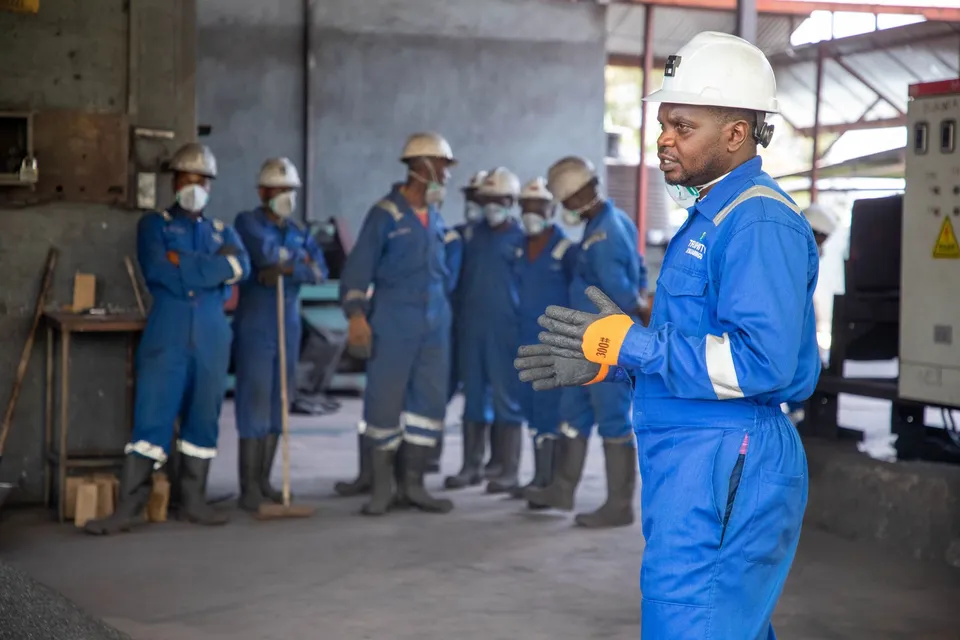
1. Must be ready now. These are the tasks where a mismatch can disrupt safety, quality or customer trust right away. If a role depends on specific credentials, equipment familiarity, or a very high pace, the employer should say so clearly. Vague wording helps nobody. A person who is a great general worker may still need time before they can step into a safety-sensitive or process-heavy role.
2. Can be taught quickly. This is where many employers leave value on the table. ExpressLearn, the office’s free learning resource, offers more than 100 mobile-friendly courses, including more than 20 software courses and topics such as communication, customer service, forklift safety, food safety and lockout tagout. That means a candidate who is strong on attendance, attitude and reliability may not need a full career reset to become productive; they may need a short software refresher or a safety update.
3. Must be learned in-house. Every workplace has its own rhythm. One site’s scanner, customer flow, paper trail or maintenance routine may be different from the next. A worker can learn the broad skill elsewhere, but the local version often needs a manager, a supervisor or a trainer to show it in context. That is especially true in roles where the written job description only hints at the real pace of the work.
This is the part many employers miss: training is not a reward for hiring the wrong person. It is a built-in cost of getting the right person productive in the right setting. When employers treat training as part of the job architecture, they can decide where to invest a little and where they need full readiness on arrival.
Why the question matters more now
The regional labor picture makes this choice more important, not less. DEED says Northeast Minnesota’s labor-force and employment growth had begun to plateau, and the first three months of 2026 showed consecutive annual labor-force declines for the first time since late 2021. The same report says the region’s 65-plus share is 21.9 percent, compared with 16.5 percent statewide.
That does not mean every employer is short-handed in the same way, and it does not prove a shortage in every occupation. But it does suggest a labor market with more replacement demand, more late-career transitions and more workers who may be returning after an absence or changing roles after years in a different line of work. In that kind of market, a rigid search for someone who already knows everything can slow hiring just when a simpler training plan could move faster.
The practical lesson is to stop treating all requirements as equal. A customer-service habit, a register system, a scheduling app and a machine-specific process do not carry the same risk if they are missing. A manager who can tell the difference can hire better and train smarter.
What employers should rewrite
If a posting keeps attracting applicants who look close but not quite right, the problem may be the posting, not the people. Rewrite the opening line of the job description around the actual work:
- What must be done on day one?
- What can be taught in the first week?
- What can be learned in a month?
- What requires site-specific practice?
That simple sorting makes interviews sharper. Instead of asking whether someone is a perfect fit, you can ask whether they have already done the parts that cannot be taught quickly and whether they have the habits that make training worthwhile. It also gives applicants a fairer target. Someone who has already worked with customers, followed safety rules or mastered one software system can see where they transfer in.
What applicants should show
Job seekers can use the same framework to present themselves better. If you are applying for a role that asks for trainability, show evidence of it. A short course, a previous software system, a safety routine or a new responsibility you picked up on a prior job tells a more useful story than a generic claim that you are a quick learner.
That matters because employers are not only buying experience. They are buying the ability to absorb the parts of the job that cannot be handed off to a manual. A candidate who can point to one completed course, one process they mastered, and one instance of stepping into a new responsibility often looks more hireable than someone who lists broad strengths without proof.
The best hires usually are not the people who need no help. They are the people whose gaps are narrow enough to close quickly and whose strengths already match the work that matters most.
A good next step is to review one open role and mark every requirement as ready now, teachable quickly, or learned on site. If you want to compare that role with others in the region, browse current jobs or contact the office to talk through the work, the schedule and the skills you already bring.